Reconstructing Boston’s 1721 EpidemicFinding the dead behind a colonial mortality count
Most histories of Boston’s 1721 smallpox epidemic focus on inoculation. That was the year Cotton Mather and the physician Zabdiel Boylston started inoculating people against smallpox, and the public fight over whether they should have has shaped how the epidemic gets told ever since. I wanted to answer a simpler question: who actually got sick and died. The usual tally is 844 dead, and for most of those people the record keeps little more than the number. I began this project during the COVID-19 pandemic, working with Molly Nebiolo and a group of Northeastern undergraduates to put names and lives to that figure.
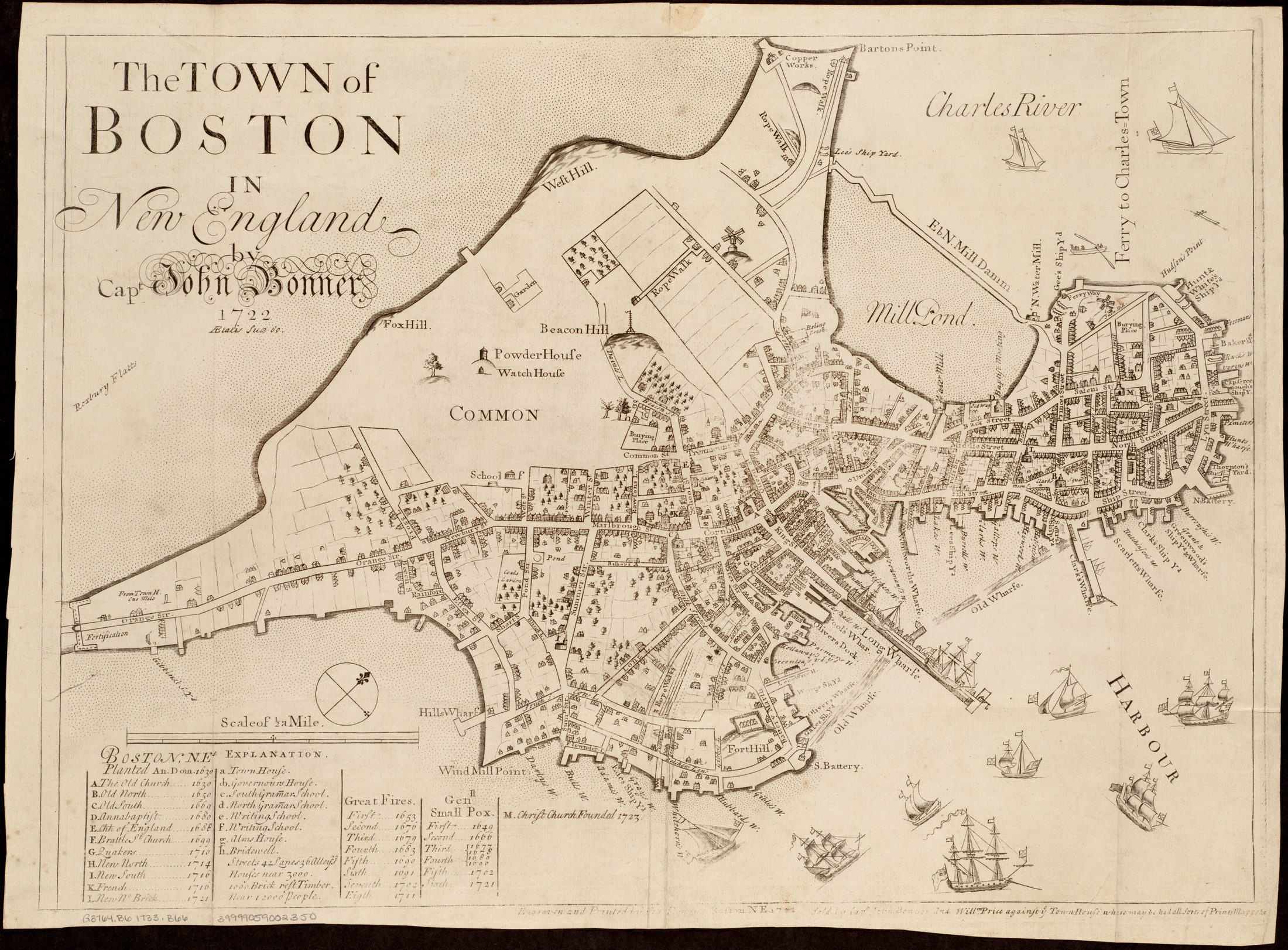
We rebuilt the list of the dead from whatever sources we could reach. The archives were closed at first, so we started online, with genealogical databases, church and town records, the selectmen’s minutes, and probate inventories that describe the houses people died in. We checked each name against several of these records, and where the evidence allowed we recorded the person’s age, household, occupation, and where in the city they lived. Then we placed them on John Bonner’s 1722 map of Boston, whose key lists the town’s earlier smallpox years. A single number turned into a database of 455 real people, grouped by household and neighborhood and set along the streets and wharves of the port.
The reason to work at this level of detail is the questions it opens up. Once the dead are individual people instead of one total, we can ask social and environmental questions that a bare death count hides. Which households were crowded? How did trade along the waterfront move infection through the town? Why did enslaved and free Bostonians not get sick, or find shelter, on the same terms? Molly and I are building several studies on top of this work, some together and some on our own, that move 1721 away from the inoculation debate and toward the environmental history of the early American city.
From the data